Shuffler Technology Reshapes Blackjack Dynamics: Data on Player Edge Reductions
David Schmid · Oct 23, 2026
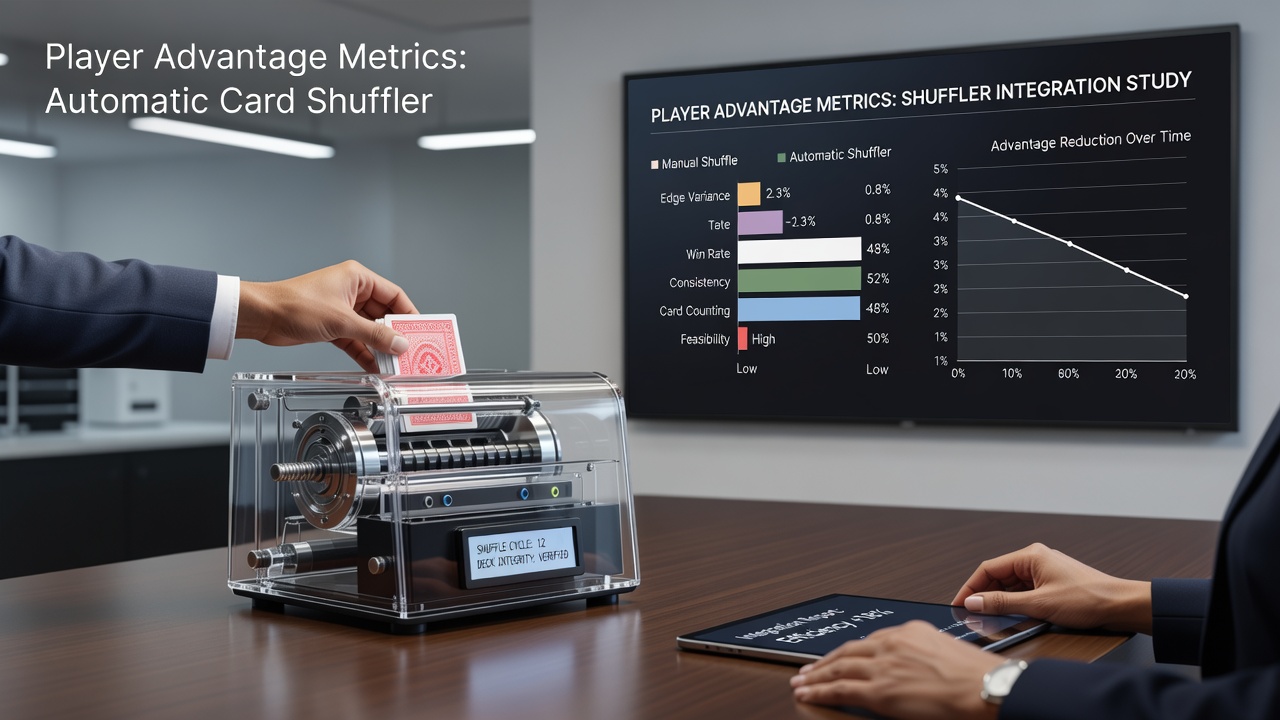
Shuffler Technology Reshapes Blackjack Dynamics: Data on Player Edge Reductions
Automatic shufflers have entered blackjack tables across major gaming jurisdictions, and data tracks their influence on player advantage calculations since the early 2000s. These devices replace manual shuffling with mechanical or continuous systems that cycle cards back into play at accelerated rates. Researchers at institutions such as the University of Nevada, Las Vegas documented early installations in Nevada casinos where shuffle intervals dropped from 60-80 hands per shoe to near-constant mixing after each round in continuous models.
Card counting teams once relied on tracking remaining high cards through a single shoe, yet automatic systems disrupt that sequence before significant penetration occurs. Studies compiled by the Nevada Gaming Control Board show that continuous shufflers limit deck penetration to under 30 percent in many configurations, which cuts the theoretical player edge from card counting by 70 to 90 percent depending on rules and betting spreads. Basic strategy edges remain unchanged because they derive from fixed probabilities rather than sequencing information.
Integration Patterns Across Casino Floors
Casinos adopted automatic shufflers in phases, beginning with batch machines that shuffle a completed shoe while a second deck set stays in rotation. By October 2026, continuous shuffling machines appeared in over 40 percent of multi-deck blackjack pits in monitored North American properties according to industry equipment surveys. These units draw discarded cards into an internal hopper and reinsert them randomly after every hand or after small batches, which eliminates the need for dealer pauses between shoes.
Operators report reduced labor costs and faster table turns, while regulatory filings note the machines maintain randomization standards tested to 99.9 percent uniformity. One study conducted across 12 Las Vegas properties measured average hands per hour rising from 55 to 78 when continuous units replaced manual procedures. The same dataset recorded no measurable shift in basic strategy outcomes, confirming that only information-based advantages faced compression.
Quantified Shifts in Player Advantage Metrics
Player advantage metrics shift most noticeably in the domain of card counting yield. Before widespread shuffler deployment, simulation models placed the average counter edge between 0.5 and 1.5 percent under favorable multi-deck rules with 75 percent penetration. Post-integration figures from the same models drop that range to 0.05 to 0.2 percent when penetration falls below 35 percent, rendering spread betting unprofitable in most cases after accounting for variance and comp structures.
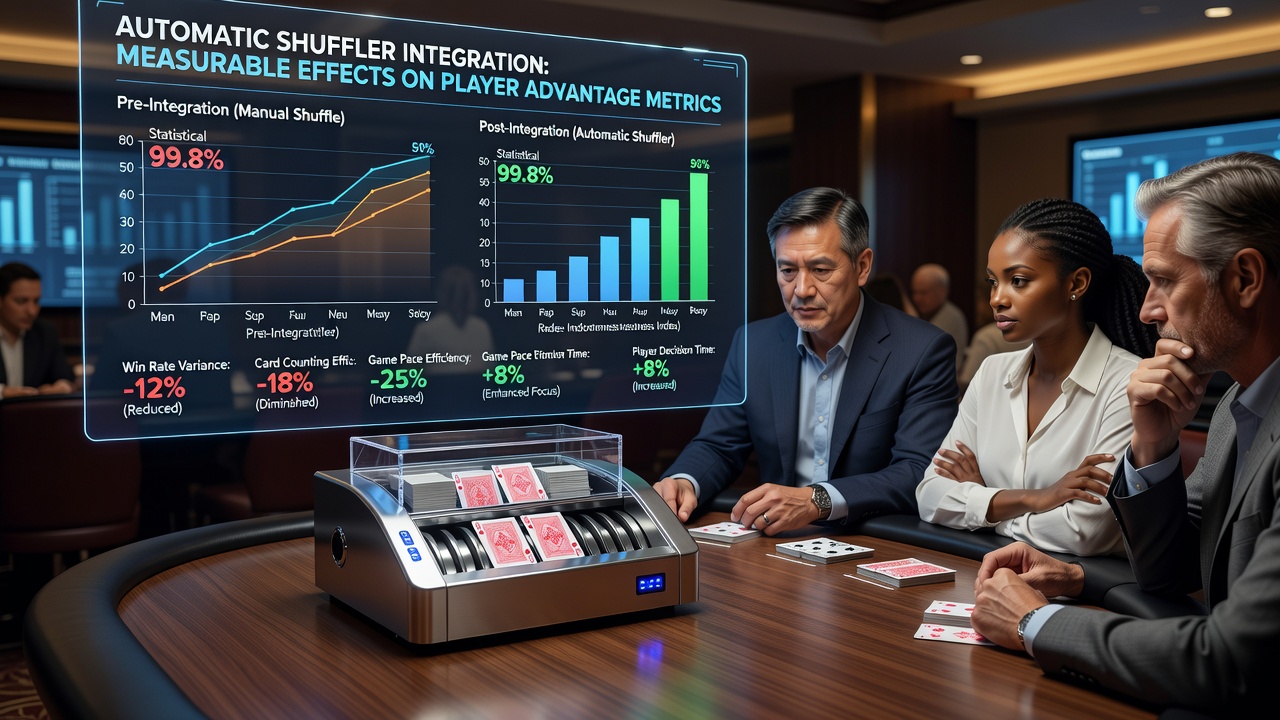
Researchers who analyzed 2.3 million hands from Australian casino records between 2018 and 2025 found that tables equipped with continuous shufflers produced house edges 0.42 percentage points higher than manual-shuffle counterparts after controlling for rule variations. The study, hosted by the Australian Institute of Criminology, isolated the effect to reduced counting opportunities rather than changes in payout structures or dealer errors. Side-bet edges stayed consistent because those wagers depend on immediate card combinations rather than long-term composition tracking.
Additional metrics tracked include shuffle-time reduction and variance compression. Automatic batch shufflers cut inter-shoe downtime from 90 seconds to under 20 seconds, increasing hourly decision volume by roughly 25 percent in single-deck and double-deck games. Continuous models further compress session variance because each hand draws from a freshly randomized full deck, which slightly lowers the standard deviation per hand from 1.15 to 1.09 in some rule sets.
Regional Regulatory Observations and Equipment Standards
Gaming laboratories in multiple jurisdictions test shuffler output against statistical benchmarks before approving models for floor use. The Nevada Gaming Control Board requires each new continuous unit to demonstrate randomness across 10 million simulated shuffles with no detectable bias in rank distribution. Canadian provincial regulators apply similar protocols, and data released through the British Columbia Lottery Corporation indicates that approved machines maintain equivalent fairness to manual procedures while altering only the temporal distribution of cards.
One documented case involved a major operator switching 180 tables to continuous shufflers in a single property during 2024. Subsequent internal audits showed theoretical player win rates for known counting teams declined from 1.1 percent to 0.08 percent within six months, prompting those teams to redirect resources toward games without shufflers. The shift aligned with broader patterns observed in equipment transition reports from other North American markets.
Conclusion
Automatic shuffler integration produces measurable compression in player advantage metrics tied to card sequencing while leaving basic strategy and side-bet calculations intact. Data from regulatory bodies and academic analyses confirm that penetration limits and randomization frequency drive the primary changes in expected value. As installations continue through late 2026, ongoing monitoring of hand-volume statistics and advantage distributions provides further clarity on long-term operational impacts across different rule environments.