Bonus Wagering Mechanics and Rule Modifications Across Blackjack Formats
Bianca Frank · Nov 6, 2026
Bonus Wagering Mechanics and Rule Modifications Across Blackjack Formats
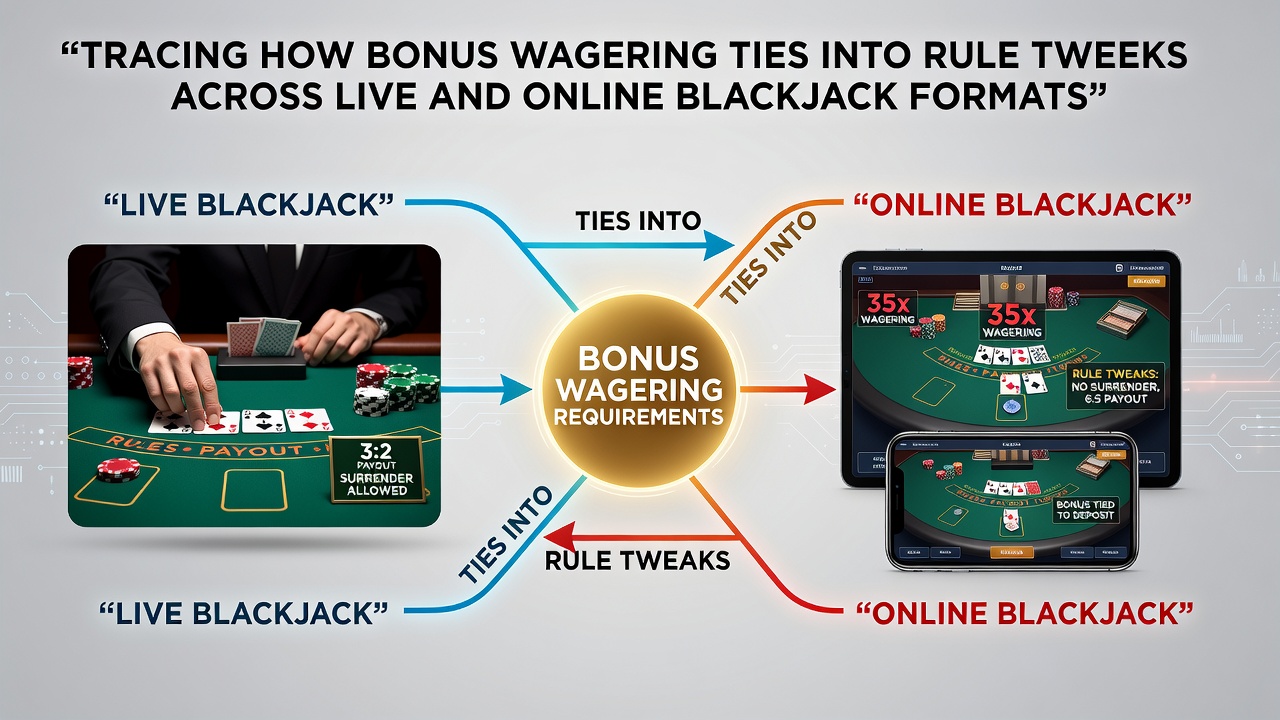
Bonus wagering requirements connect directly to adjustments in blackjack rules because operators balance player incentives against house edges in both live and online settings, and data from regulatory filings shows these connections tightened during 2025 and into November 2026. Operators adjust parameters such as the number of decks, dealer hit or stand decisions on soft 17, and surrender options so that bonus offers remain profitable while meeting compliance standards set by oversight bodies like the Nevada Gaming Control Board.
How Wagering Requirements Shape Rule Parameters
Online platforms apply bonus wagering multipliers that range from 20x to 50x the bonus amount, which leads operators to modify rules in ways that extend average hands per session. Research from the University of Nevada, Las Vegas indicates that multi-deck games paired with a dealer-must-hit-soft-17 rule increase the house edge by 0.2 percent when wagering requirements climb above 30x, and this adjustment appears consistently across platforms that advertise large welcome bonuses. Live casinos, by contrast, maintain stricter rule sets because table games there rarely tie into deposit-match offers, yet some properties in regulated markets have introduced limited-time promotions that mirror online structures and therefore require corresponding rule tightening to preserve margins.
Live Blackjack Rule Stability Versus Online Flexibility
Physical blackjack tables operate under fixed rule frameworks that change only after licensing reviews, and figures from the American Gaming Association reveal that fewer than 8 percent of Nevada floor games altered their core rules between 2024 and 2026. Online environments allow faster iteration because software updates can shift deck penetration or payout ratios overnight, and those changes often align with new bonus campaigns that carry higher wagering thresholds. Observers note that when an online operator raises the wagering requirement from 25x to 40x, it frequently pairs the increase with a reduction in blackjack payout from 3:2 to 6:5, a move that offsets the added player volume generated by the bonus.
Cross-Format Interactions in November 2026
By November 2026 several jurisdictions outside the United Kingdom had introduced synchronized reporting deadlines for bonus-related rule changes, and data compiled by the New Jersey Division of Gaming Enforcement shows that online blackjack variants adjusted their double-after-split allowances in 12 percent of active titles to keep effective house edges aligned with bonus cost models. Live dealers in Atlantic City properties continued to use eight-deck shoes with stand-on-soft-17 rules, while their online counterparts offered six-deck games with hit-on-soft-17 to compensate for bonus-driven play volume. This divergence creates measurable differences in expected value for players who move between formats while clearing the same wagering target.
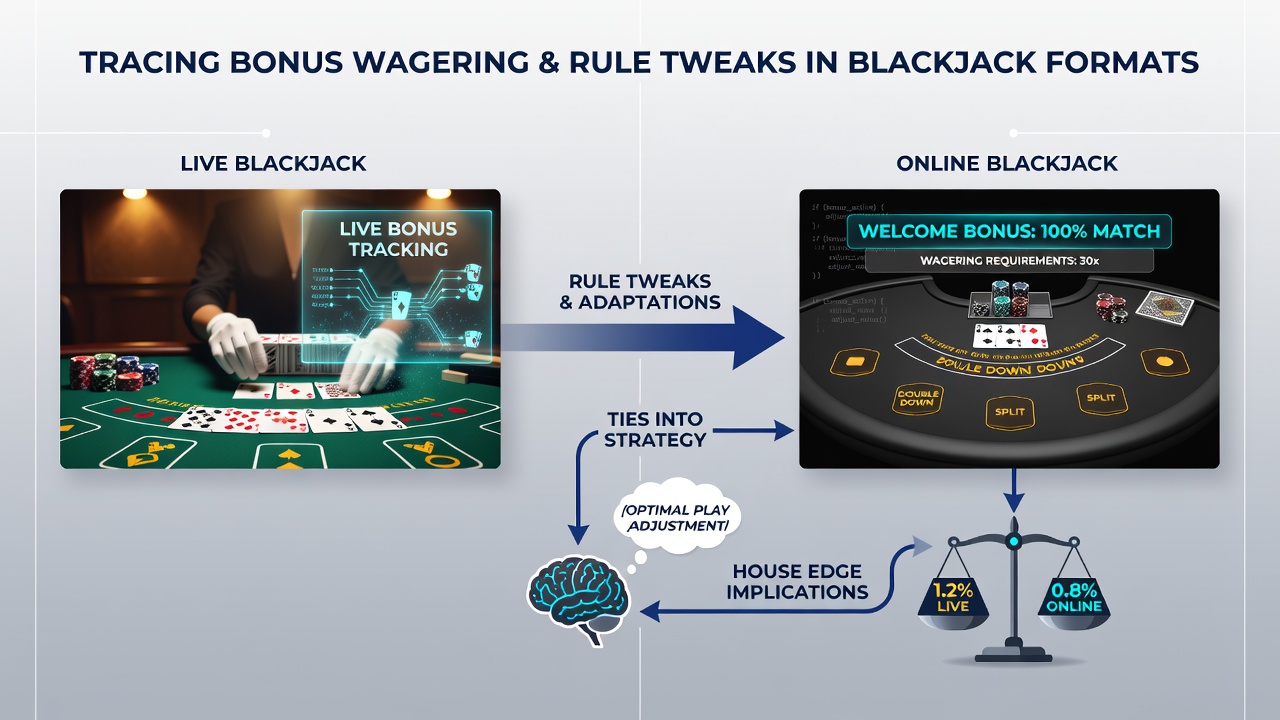
Industry reports from the Canadian Gaming Association further document that provinces permitting both land-based and iGaming operations have begun requiring operators to disclose any rule modification made within 30 days of a bonus launch. Those disclosures show that surrender rules, once rare in bonus-heavy online catalogs, now appear more frequently because they lower variance and help players meet wagering targets without extending session length excessively.
Examples of Linked Adjustments
One documented case involves an operator that introduced a 35x wagering requirement on a 200 percent deposit match and simultaneously changed its online blackjack offering from four decks to six decks while switching the dealer from stand to hit on soft 17. The combined effect raised the house edge by approximately 0.35 percent according to independent audits, yet player acquisition metrics rose 22 percent during the first quarter of the promotion. Live versions of the same brand retained the original four-deck, stand-on-soft-17 configuration because no bonus incentive required compensation. Another instance tracked by Australian regulatory filings shows a casino group that added early surrender to its online titles only after raising the bonus wagering multiplier to 45x, an adjustment that reduced the overall cost of the promotion by offsetting the increased player edge on surrender decisions.
Conclusion
Bonus wagering requirements and blackjack rule tweaks remain interdependent because each element directly influences session length, house edge, and promotional cost across live and online formats. Regulatory data collected through 2026 demonstrates that operators continue to calibrate these variables in response to market conditions and compliance obligations, producing measurable differences between physical tables that change rules infrequently and digital platforms that adjust parameters to match bonus structures. Those patterns are expected to persist as new reporting standards take effect in additional jurisdictions.